

Architectural resurrection identifies houses that romanticize the visual designs of a former age. Prominent architects teamed with house builders to provide cheap home plans in many different revival styles available to a larger populace. These details were mostly available through catalogs and featured quite a few down-scaled variations of historical architectural styles. American style houses are getting a thing in Germany because of its revival designs and less complicated house structures. Below are some of the designs that you might be interested in.
Tudor Revival
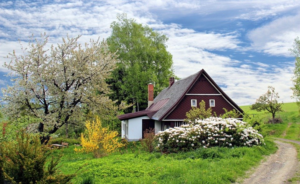 Tudor Revival houses hit their summit of distinction during the 1920s as individuals focus augmented. The new rush of Tudor homes stayed consistent with a great deal of their style’s middle age inceptions while incorporating present-day comforts that relate to homebuyers of their second. Another variation of Tudor Revival has been the storybook plan that necessary a signal from fantasies and bungalows situated in the Cotswold territory of England. They came up short on the mark half-woods of regular Tudors, utilizing rock, block, and plaster exteriors. All these dreams based Tudor Revivals were more boundless in upscale zones.
Pueblo
While Pueblo Revival largely spanned the first half of the 20th century, the design remains a favorite today from the Southwestern U.S. For example, a trip to New Mexico will show Pueblo Revival houses that date back to the 1910s, in addition to newly constructed illustrations. This architectural revival style is known as”Santa Fe Style.” New Mexico entered the marriage 1912 and this resurrection design was an answer to its recently acquired statehood.
Pueblo’s resurrection is a mixture of Spanish Colonial, regional and mission Native American architectural designs. This design showcased horizontal roofs, parapets, curved wall borders, adobe or stucco indoors and outside with vigas. State founders thought this fashion would cement New Mexico’s individuality among tourists and tourists alike. These days, however, the vast majority of Pueblo Revival houses are situated in New Mexico.
Italian Renaissance
This resurrection style is frequently mistaken with 19th-century Italianate style. Both fashions drew inspiration from the Renaissance and Baroque periods of Italy; nonetheless, Italian Renaissance Revival houses have a contemporary countenance compared to their previous Italianate cousins. These are middle and upper-class suburban homes that were broadly based on Italian Rennaissance palazzos or beachfront villas, including low-pitched, hipped, or flat roofs. The roof also has wide eaves that overhang the construction and decorative mounts placed beneath the roofline. First-floor doors and windows are usually framed with curved arches. These houses occasionally featured covered porches.